

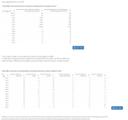
The U.S. EPA on April 18 released updated small refinery exemption (SRE) data, reporting that two additional SRE petitions have been filed under the Renewable Fuel Standard in the past month. A total of 38 SRE petitions are now pending.

A joint statement issued by President Joe Biden and Japanese Prime Minster KISHIDA Fumio on April 10 outlines the intentions of the two countries to cooperate on expanding the availability SAF including SAF made from ethanol.

Colonial Oil Industries Inc. will pay a $2.8 million civil penalty and purchase and retire 9 million RINs at an estimated price of $12.2 million under a settlement agreement reached with the EPA and Justice Department related to CAA violations.
Ethanol Producer Magazine announced the keynote speakers for the 2024 International Fuel Ethanol Workshop & Expo (FEW) being held June 10-12, 2024 at the Minneapolis Convention Center in Minneapolis, Minnesota.
The Startup World Cup, the world’s largest startup pitch competition, will select one winner from Pitch Day at the International Fuel Ethanol Workshop & Expo to compete in the Startup World Cup Finale.
The RFA is urging federal officials to use a 30-year time frame to account for LUC emissions as they work to complete the upcoming 40BSAF-GREET model, which will be used to calculate emissions reductions for the SAF tax credit.
The U.S. EPA has rescheduled a planned webinar on the biogas regulatory reform rule (BRRR) provisions of the Renewable Fuel Standard program. The webinar, originally scheduled for April 4, will now take place April 12 from 11:00-3:30 p.m. ET.
The USDA On March 28 awarded more than $120 million through the Rural Energy for America Program to 541 projects spanning 44 states. Several bioenergy projects are among those selected to receive funding.

The U.S. Department of Transportation’s Federal Aviation Administration on April 1 opened a $269 million funding opportunity under its Airport Improvement Program. SAF infrastructure projects are among those eligible for the funding.

Legislation introduced in the Illinois Senate aims to create a technology-neutral clean fuel standard (CFS) that would reduce the carbon intensity of transportation fuels by 20% by 2038.
The U.S. Department of Energy’s Office of Fossil Energy and Carbon Management in March issued a notice of intent (NOI) to launch a Voluntary Carbon Dioxide Removal Purchasing (CO2RP) Challenge.
The U.S. EPA on March 21 released updated RIN data, reporting that nearly 2.02 billion RINs were generated under the RFS in February, up from 1.91 billion generated the previous month and 1.76 billion generated in February of last year.
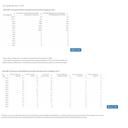
The U.S. EPA released updated SRE data on March 21, reporting that one new SRE petition has been filed under the RFS in the past month. A total of 36 SRE petitions are now pending, up from 35 that were pending as of mid-February.

A multi-state coalition of biofuel leaders and farm advocates called on President Biden’s Treasury Department to swiftly resolve any questions standing in the way of efforts to scale up U.S. production of SAF.

The U.S. Energy Information Administration is providing an opportunity for stakeholders in the U.S. densified biomass industry, such as wood pellet producers, to comment on ways to improve its monthly data collection efforts.

World Energy LLC on March 18 announced it has been invited by the U.S. Department of Energy to submit the Part II Application for an approximately $2 billion loan guarantee to support a proposed SAF project.

President Joe Biden, Agriculture Secretary Tom Vilsack and U.S. EPA Administrator Michael Regan on March 19 recognized National Agriculture Day by honoring the farmers and ranchers who produce our nation’s food, feed, fuel and fiber.

The Michigan Senate Committee on Energy and Environment on March 14 held a hearing to consider legislation introduced last year that aims to create a tax credit to support the purchase of sustainable aviation fuel (SAF).
The U.S. EPA on March 15 denied a petition filed by the American Fuel & Petroleum Manufacturers in December 2023 seeking a partial waiver of the 2023 cellulosic biofuel renewable volume obligation (RVO) under the Renewable Fuel Standard.
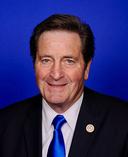
Rep. John Garamendi, D-Calif., and Sen. Angus King, I-Maine, on March 11 each introduced legislation that aims to allow facilities generating renewable electricity from forest biomass, such as woodchips or sawdust, to participate in the RFS.
DOE report explains how America can sustainably produce more than 1 billion tons of biomass per year
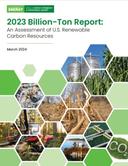
The U.S. Department of Energy on March 15 released the 2023 Billion-Ton Report (BT23), which shows that the U.S. could sustainably triple its production of biomass to more than 1 billion tons per year.
Preliminary agenda released for 40th annual International Fuel Ethanol Workshop & Expo
By BBI International
March 15, 2024
Ethanol Producer Magazine announced this week the preliminary agenda for the 2024 International Fuel Ethanol Workshop & Expo (FEW) taking place June 10-12, 2024 at the Minneapolis Convention Center in Minneapolis, Minnesota.
The U.S. Department of Commerce’s International Trade Administration has announced the Renewable Energy and Energy Efficiency Advisory Committee will hold a virtual meeting on March 21.

Natural Resources Canada on March 8 awarded $15 million to six clean fuel projects, including those focused on renewable natural gas (RNG), sustainable aviation fuel (SAF), and the use of wood biomass to produce renewable energy.
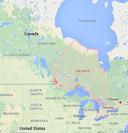
The Government of Ontario is investing $60 million in the Forest Biomass Program, which will make targeted investments in forest sector initiatives to develop the economic potential and environmental benefits of forest biomass.
USDA on March 8 celebrated the second annual National Biobased Products Day, a celebration to raise public awareness of biobased products, their benefits and their contributions to the U.S. economy and rural communities.

New Mexico Gov. Michelle Lujan Grisham on March 5 signed legislation to establish a technology-neutral clean transportation fuel standard (CTFS) that aims to reduce the carbon intensity (CI) of transportation fuels by at least 30% by 2024.

The U.S. EPA on March 6 announced plans to hold a public webinar on the biogas regulatory reform rule (BRRR) provisions of the Renewable Fuel Standard program. The webinar is scheduled for April 4 from 1:00 – 4:30 pm EST.
A coalition representing biofuel producers, farmers and others on March 5 sent a letter to U.S. EPA Administrator Michael Regan urging him to reject a petition filed by CVR Energy Inc. asking the agency to restructure the RFS RIN trading program.

The U.K. government has opened a public comment period as part of its effort to avoid market manipulation caused by overlapping domestic and international incentives for sustainable aviation fuel (SAF) and other low carbon fuels.
Advertisement

@ Copyright 2026 - BBI International - All rights reserved.