


The U.K. government is considering extending subsidies for biomass power producers that plan to develop bioenergy with carbon capture and storage (BECCS) capacity. A public consultation is open through Feb. 29.
The U.S. EPA published updated renewable identification number (RIN) data on Jan. 18, reporting that nearly 23.75 billion RINs were generated under the Renewable Fuel Standard in 2023, up from 21.35 billion RINs generated in 2022.
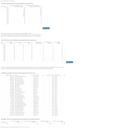
The U.S. EPA on Jan. 18 released updated small refinery exemption (SRE) data, reporting that eight new SRE petitions have been filed under the Renewable Fuel Standard in the past month. A total of 15 SRE petitions are now pending.

The U.K. government on Jan. 16 approved plans for Drax Power Ltd.’s proposed bioenergy with carbon capture and storage (BECCS) project that will capture carbon dioxide emissions from up to two existing biomass units at Drax Power Station.
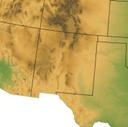
Legislation introduced in the New Mexico House of Representatives on Jan. 3 aims to establish a technology-neutral clean transportation fuel standard that would reduce the carbon intensity of transportation fuels by at least 30 percent by 2040.
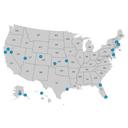
The U.S. DOE’s Bioenergy Technologies Office and National Renewable Energy Laboratory announced selectees for the 2023 Waste-to-Energy (WTE) Technical Assistance for Local Governments Program.

The U.S. EPA on Jan. 11 proposed to strengthen CAA standards for large facilities that burn MSW. The proposed standards would apply to 57 facilities with 152 units that have the capacity to combust more than 250 tons per day of MSW.
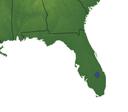
Legislation currently pending in Florida aims to promote the development of renewable natural gas (RNG) production within the state by allowing utility companies to recover certain costs associated with the development of RNG infrastructure projects.

The U.S. Court of Appeals for the 11th Circuit dismissed Hunt Refining Company v. U.S. EPA on Jan. 11, ruling that the SRE challenge brought by Hunt under the RFS should instead be heard by the U.S. Court of Appeals for the D.C. Circuit.

Ethanol Producer Magazine and BBI International announced that they are now accepting speaker presentation proposals for the 2024 International Fuel Ethanol Workshop & Expo. The event will be held June 10-12, 2024, in Minneapolis, Minnesota.

Growth Energy has filed two petitions for rehearing with the Fifth Circuit Court of Appeals regarding the Court’s 2023 decision on small refinery exemptions (SREs) under the Renewable Fuel Standard.
The Renewable Fuels Association on Jan. 8 filed a petition with the Fifth Circuit Court of Appeals requesting a rehearing related to a November 2023 court decision on small refinery exemptions (SREs) filed under the Renewable Fuel Standard.
A new government report focuses on advancing biotechnology; improving U.S. data infrastructure and accessibility; and sustainably growing the bioeconomy across the nation's climate, energy, biomanufacturing, health, agricultural, and environment sectors.

Alberta-based Green Impact Partners on Jan. 2 announced it has executed the final purchase and sale agreement for the investment tax credits (ITCs) for GreenGas Colorado, a 360,000 MMBtu per year RNG project located in Weld County, Colorado.
The U.S. Treasury Department and IRS on Dec. 22 released proposed regulations for the clean hydrogen tax credit created by the Inflation Reduction Act. The guidance, in part, addresses the production of clean hydrogen using biomass and biogas.
More than 1.99 billion RINs were generated under the RFS in November, up from 1.95 billion generated during the same period of last year. Total RIN generation for the first 11 months of 2023 reached 21.55 billion.

The U.S. EPA released updated small refinery exemption (SRE) data on Dec. 21, reporting that four new SRE petitions have been filed under the Renewable Fuel Standard in the past month. A total of seven SRE petitions are now pending.

More than 200 organizations on Dec. 13 sent a letter to federal lawamakers urging passage of the Renewable Natural Gas Incentive Act, which aims to create a $1 per gallon tax credit for the sale of RNG used in transportation.

The government of British Columbia on Dec. 11 released regulations for its revamped low carbon fuels program, becoming the first jurisdiction in North America to require the use of sustainable aviation fuels (SAF).
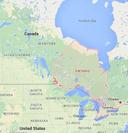
The Ontario government is investing more than $1.5 million in 15 research, innovation and modernization initiatives that will develop the untapped economic potential and environmental benefit of new and emerging uses of forest biomass.
2024 North American SAF Conference & Expo now accepting abstracts
By BBI International
December 12, 2023
SAF Magazine in collaboration with CAAFI, has announced the 2024 North American SAF Conference & Expo will take place Sept. 11-13, 2024, in St. Paul, Minnesota. The event is accepting abstract submissions through May 10.

Rep. Mariannette Miller-Meeks, R-Iowa, on Dec. 7 introduced a bill that aims to allow companies to preserve renewable identification number (RIN) credits under the Renewable Fuel Standard for renewable fuel used in ocean-going vessels.
The California Air Resources Board has identified the Low Carbon Fuel Standard as a critical program to help California achieve carbon neutrality by 2045 and to improve air quality in the state, according to the Low Carbon Fuels Coalition.

Biomass Magazine on Dec. 6 released the agenda for the 17th Annual International Biomass Conference & Expo taking place March 4-6, 2024 at the Greater Richmond Convention Center in Richmond, Virginia.

In an article published in Open Access Government, Reyhaneh Shenassa, chief engineer at the U.S. Department of Energy Bioenergy Technologies Office, explains how U.S. sustainable aviation fuels (SAF) will reduce aviation carbon emissions.

A coalition of over 20 organizations and companies launched the Partnership for Electric Pathways to work with the U.S. EPA to secure a viable pathway for renewable electricity to get credit under EPA's Renewable Fuel Standard program.
A coalition of biofuel and farm groups on Nov. 27 released a statement expressing disappointment in the Fifth Circuit Court of Appeals' Nov. 22 decision remanding to the U.S. EPA six small refinery exemption (SRE) requests.
The U.S. Department of Commerce’s International Trade Administration has announced its Renewable Energy and Energy Efficiency Advisory Committee will hold a virtual meeting on Nov. 30. The meeting is open to the public, but registration is required.
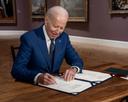
President Joe Biden on Nov. 16 signed a temporary spending package, averting a government shutdown that was set to begin at midnight on Nov. 17. The stopgap bill includes a one-year extension of the 2018 Farm Bill.

Reps. Nikki Budzinski, D-Ill., and Zach, Nunn, R-Iowa, on Nov. 15 announced the introduction of a bill that aims to update the USDA’s Biorefinery, Renewable Chemical and Biobased Products Assistance loan guarantee program.
Advertisement

@ Copyright 2026 - BBI International - All rights reserved.