

XCF Global Inc. on Sept. 25 announced August revenue from the sale of renewable diesel of more than $10 million from the shipment of 1.3 million gallons from XCF's New Rise Renewables Reno facility in Nevada.

INERATEC and Ramboll are expanding their cooperation to further develop industrial e-SAF production. The focus of the cooperation is the expansion of the ERA ONE power-to-liquid plant in Frankfurt-Höchst.

The U.K. Department for Transport on Sept. 17 released preliminary 2026 data regarding the country’s SAF mandate, reporting that 292 million liters (77.14 million gallons) SAF was supplied to the U.K. aviation market from Jan. 1 through Aug. 15.

Infinium on Sept. 21 introduced its mSAF product offering, a new methane-derived sustainable aviation fuel (SAF) platform which converts renewable natural gas, biogas, flare gas, and other qualified methane streams into low-carbon aviation fuel.

Green Fuel Forward, launched by GenZero and the World Economic Forum in May 2025 to scale demand for SAF, on Sept. 22 announced an expanded partnership structure and new members as it enters its next phase of market activation.

The Civil Aviation Authority of Singapore is deferring implementation of the SAF levy for air cargo shipments for one year. The SAF levy for origin-destination passengers and general and business aviation will be implemented on schedule.

OMV Petrom, the largest integrated energy producer in Southeastern Europe, is advancing the construction of the new sustainable fuels production unit at Petrobrazi. The project is expected to begin commissioning in 2028.

Emerson has been awarded a contract by Technip Energies to provide automation technologies for the SkyNRG sustainable aviation fuel (SAF) plant—the first dedicated greenfield SAF production facility in Europe.

Neste and United Airlines extended their existing agreement on the supply of SAF blended with conventional jet fuel to flights departing Chicago O’Hare International Airport in the U.S.and Amsterdam Airport Schiphol in the Netherlands.

The U.S. EPA on Sept. 17 reported that 2.02 billion RINs were generated under the RFS in August, up 6% when compared to the same month of last year. Total RIN generation for the first eight months of the year reached 16.34 billion.

Sasol and White Desert on Sept. 15 announced a landmark sustainable aviation fuel (SAF) partnership, a significant milestone for African aviation and the country’s emerging lower-carbon fuels industry.
XCF Global Inc., a scaling U.S.-based producer of renewable diesel and SAF, together with DevvStream Corp. and Southern Energy Renewables Inc. on Sept. 14 announced an amendment to their previously announced business combination agreement.

The Senate Agriculture Committee on Sept. 16 voted 12-11 to advance the Agriculture Act of 2026, commonly referred to as Senate Farm Bill 2.0. The legislation includes provisions allowing year-round sales of E15 and supporting the SAF industry.

FedEx is scaling its sustainable aviation fuel (SAF) procurement through new agreements projected to secure more than 20 million gallons of neat SAF across five U.S. airports through calendar year 2027.
Rollins announces launch of American Biofuels Trade Outlook

September 15, 2026
U.S. Agriculture Secretary Brook Rollins on Sept. 15 announced the launch of USDA’s new American Biofuels Trade Outlook, a four-part strategy that aims to boost export opportunities for U.S. biofuel producers.

Wison Engineering and Axens on Sept. 7 signed a memorandum of understanding (MOU) to explore collaboration opportunities on selected e-sustainable aviation fuel (e-SAF) projects based on Fischer-Tropsch pathway.

The U.S. Energy Information Administration maintained its 2026 and 2027 production forecasts for biodiesel, renewable diesel and sustainable aviation fuel (SAF) in its latest Short-Term Energy Outlook, released Sept. 9.

Akasa Air, India’s fastest-growing airline, successfully operated a commercial flight using conventional aviation turbine fuel blended with 1% sustainable aviation fuel (SAF), supplied by Bharat Petroleum Corp. Ltd. on Sept. 8.

Axens on Aug. 31 announced that it has been selected by Expander Energy Inc., a Canada-based producer of sustainable aviation fuel (SAF) and renewable diesel (RD), to provide its advanced FT Liquid Upgrading technology.
Bayer and Neste close commercial agreement to jointly scale newgold winter canola for biofuels production

September 10, 2026
Bayer and Neste, the world’s leading producer of renewable diesel and sustainable aviation fuel (SAF), on Sept. 9 announced the companies have finalized a commercial agreement to jointly scale Bayer’s newgold winter canola.
Jet Zero Australia raises $30 million

By Jet Zero Australia Pty Ltd
September 09, 2026
Jet Zero Australia has achieved three major milestones for Project Ulysses, its proposed commercial-scale sustainable aviation fuel (SAF) and renewable diesel (RD) refinery in Townsville, Queensland, Australia.

Niutech Technology Group Co. Ltd. has signed a sales contract with a global energy major for an industrial continuous waste plastic pyrolysis production line that will produce waste plastic pyrolysis oil that will be used to produce SAF.

Researchers at the Joint Bioenergy Institute have demonstrated the production of a biobased jet fuel precursor Rhodosporidium toruloides, a type of oil-accumulating yeast that is a promising microbial host for biomanufacturing.

Calumet Inc. has announced a new flight plan for its MaxSAF expansion at Montana Renewables LLC. The facility is expected to reach 200 million gallons of annual SAF production and 17,000 barrels per day of total product sales by year-end 2028.
XCF Global advances commercial execution
By XCF Global Inc.
September 02, 2026
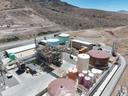
XCF Global Inc., a scaling U.S.-based producer of renewable diesel and SAF, on Sept. 1 announced another milestone in the company's transition from development-stage operations to active, revenue-generating commercial production.

The future of SAF will depend on strong partnerships among farmers, fuel producers, the aviation industry and government leaders, according to panelists participating in a discussion during the 2026 Global Aerospace Summit.

Vancouver International Airport has launched a new online calculator that allows travelers to estimate their flight’s greenhouse gas (GHG) emissions and contribute to the use of sustainable aviation fuel (SAF).

EVA Air on signed an MOU with AIT Worldwide Logistics to jointly advance EVA Air's Green Transportation Program. In the first year of the collaboration, EVA Air will provide 15,000 metric tons of CO₂e in SAF environmental attributes to Microsoft.

KBR announced on Aug. 24 it has been awarded a contract by KazMunayGas-Aero LLP, a subsidiary of NC KazMunayGas JSC, and KazFoodProducts for Kazakhstan’s first sustainable aviation fuel (SAF) production plant.
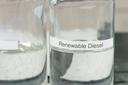
XCF Global Inc. on Aug. 27 addressed current dynamics across North American fuel markets as U.S. refiners face tighter crude slates following recent production pullbacks and maintenance across Canadian oil sands facilities.
Advertisement

@ Copyright 2026 - BBI International - All rights reserved.