


Worldwide renewable energy employment reached 12.7 million last year, according to a report released by the International Renewable Energy Agency. Liquid biofuels, solid biomass and biogas accounted for a combined 3.44 million of those jobs.

The Canadian government is seeking proposals for projects that will support the establishment of biomass supply chains to ensure that a steady and usable supply of sustainable feedstock is available to clean fuel production facilities.

A panel of expert judges has selected nine teams as finalists in the U.S. Department of Energy Bioenergy Technologies Office's Wood Heater Design Challenge. The finalists will now advance to this year's Technology Slam.

A new study confirms that wood pellets in British Columbia are sourced entirely from sawmill and harvest residuals or from low-quality logs and bush grind rejected by other industries, according to the Wood Pellet Association of Canada.

The U.S. Energy Information Administration recently released data showing U.S. manufacturers produced approximately 870,000 tons of densified biomass fuel in May, with sales reaching 890,000 tons.

The USDA on Sept. 14 announced it is investing up to $2.8 billion in 70 selected projects under the first pool of the agency's Partnerships for Climate-Smart Communities funding opportunity. Projects include those addressing RNG and SAF.

MEPs on Sept. 14 voted in favor of proposals for a revised RED. The proposals aim to raise the share of renewables in the EU's final energy consumption to 45 percent by 2030. They also address the use of woody biomass.

The White House hosted an event Sept. 13 to celebrate the Inflation Reduction Act, which was signed by President Biden on Aug. 16. Biden also issued an executive order on the implementation of the energy and infrastructure provisions of the IRA.

The Western Maryland Resource Conservation and Development Council and the Maryland Clean Energy Center have partnered to produce a wood energy fuel supply chain analysis to evaluate thermal wood energy deployment.
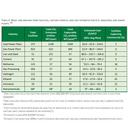
An Industrial Decarbonization Roadmap released by the DOE on Sept. 7 identifies four key pathways to reduce industrial emissions from American manufacturing, including through the use of biofuels, biobased feedstocks and CCUS.

Renewable electricity is expected to account for 22 percent of U.S. generation this year, increasing to 24 percent in 2023, according to the U.S. Energy Information Administration's latest Short-Term Energy Outlook, released Sept. 7.
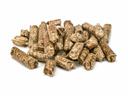
The U.S. exported 649,185.7 metric tons of wood pellets in July, down from 832,092.2 metric tons the previous month, but up when compared to the 546,519.1 metric tons exported in July 2021, according to data released by the USDA FAS on Sept. 7.
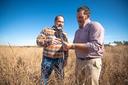
Mississippi State scientists have developed three switchgrass varieties that are ready for commercial use. The university is working with Roundstone Native Seed Co. to deliver the “Robusto,� “Espresso,� and “Tusca� switchgrass varieties.

Clarke Energy USA Inc., a KOHLER Company, has secured a project to supply Peaks Renewables LLC, a subsidiary of Summit Utilities, Inc., with a new natural gas fired CHP system, as well as a KOHLER back-up gas-fuelled generator.

U.S. wood pellet manufacturers are urging the owners of wood pellet heating appliances to secure their pellet fuel early this year as the global pellet market works to fill a significant supply hole created by the Russian invasion of Ukraine.

The U.S. Department of Energy has announced applications for the Wood Heater Technology Slam are due Aug. 31. The event is part of the agency's 5th Wood Stove Design Challenge, which launched in December 2021. The slam will be held Sept. 29.

Liberty (RNG) LLC has acquired Sandhill Advanced Biofuels LLC, a developer of RNG projects located on dairy farms that currently has four projects in Wisconsin. Liberty has also joined a multi-state hydrogen hub project.

The U.K. government is proposing to temporarily suspend certain fuel quality requirements for Renewable Heat Incentive participants using wood pellets in response to supply impacts resulting from Russia's invasion of Ukraine.


National Grid has located robust stocks of renewable natural gas (RNG) and hydrogen potentially available for its customers in Massachusetts and New York through the company's first-of-its kind Northeast clean energy RFI issued in May.

Archaea Energy Inc. is expanding its commercial partnership with Énergir L.P. by entering into a new long-term RNG purchase and sale agreement. This is the second long-term commercial agreement between the two companies.

The ITA is seeking additional nominations for members of its Renewable Energy and Energy Efficiency Advisory Committee in an effort to widen the pool of qualified candidates and to ensure that diverse points of view are represented.

The Pellet Fuels Institute celebrated the inclusion of an extension of the residential tax credit for qualifying wood and wood pellet heating appliances in the Inflation Reduction Act of 2022, signed into law Aug. 16 by President Joe Biden.

President Joe Biden on Aug. 16 signed the Inflation Reduction Act into law, calling the legislation the “biggest step forward in climate—everâ€� and stressing it will allow the U.S. to boldly take additional steps towards meeting its climate goals.

INNIO has announced Raven SR' will use INNIO's Jenbacher engines [60 Hz] with a “Ready for H2� option to power and heat the company's S- Series hydrogen production facility at a sanitary landfill in Richmond, California.

The House on Aug. 12 voted 220 to 207 to pass the Inflation Reduction Act, a legislative package that includes a wide range of provisions that benefit the biofuel and bioenergy industries. President Biden is expected to sign the bill next week.

The Canadian government on Aug. 3 awarded $1.8 million under Agriculture and Agri-Food Canada's AgriAssurance Program to Bioindustrial Innovation Canada, a nonprofit group that supports the commercialization of sustainable technologies.

Renewable electricity is expected to account for 22 percent of U.S. generation this year, increasing to 24 percent in 2023, according to the U.S. Energy Information Administration's latest Short-Term Energy Outlook, released Aug. 9.

The Senate on Aug. 7 passed the Inflation Reduction Act of 2022 by a vote of 51 to 50 along party lines. Vice President Kamala Harris cast the tie-breaking vote. The bill includes a range of provisions benefiting biofuel and bioenergy prodcution.

The U.K. government on Aug. 4 awarded £32 million to 12 projects that aim to increase production of sustainable biomass. An additional £5 million was awarded to 22 projects to support new technologies that generate hydrogen from biomass and waste.
Advertisement

@ Copyright 2026 - BBI International - All rights reserved.