


Artificial intelligence has a growing role in improving pellet plant performance, efficiency and reliability.

Tropical Storm Arthur and the domestic wood pellet sector collided in Point Clear, Alabama, in June at the PFI Annual Conference.


The USDA maintained its forecast for 2026-’27 soybean oil use in biofuel production in its latest World Agricultural Supply and Demand Estimates report, released Aug. 12. The estimate for 2025-’26 soybean oil use in biofuel was revised up.

Viridi Energy on Aug. 11 announced that it has executed a contract to sell renewable natural gas (RNG) produced by its Waco RNG facility to Citadel Energy Marketing.

XCF Global Inc., an emerging U.S.-based producer of renewable diesel and sustainable aviation fuel (SAF), on Aug. 11 announced sales of renewable diesel from XCF Global's New Rise Renewables Reno facility to Tartan Oil LLC.
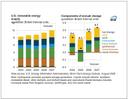
Renewables are expected to account for 26% of U.S. electricity generation in 2026, increasing to nearly 28% in 2027, according to the U.S. Energy Information Administration’s latest Short-Term Energy Outlook, released Aug. 11.

The U.S. Energy Information Administration maintained its 2026 and 2027 production forecasts for biodiesel, renewable diesel and sustainable aviation fuel (SAF) in its latest Short-Term Energy Outlook, released Aug. 11.

CHAR Technologies Ltd. has announced installation of the commercial HTP kiln at its Thorold Renewable energy Facility is now complete. Commercial operations are currently expected to begin by the end of September.

American Airlines and Infinium on Aug. 6 announced its first delivery of electro sustainable aviation fuel (eSAF) to a commercial airport for use in a commercial passenger flight, marking a major milestone in the decarbonization of aviation.

Clean Energy Fuels Corp. on Aug. 6 announced the company sold 63.2 million gasoline gallon equivalents (CCEs) of renewable natural gas (RNG) during the second quarter of 2026, up 2.9% when compared to the same period of 2025.

With the initial phase of its MaxSAF 150 initiative now complete, Montana Renewables is preparing to further increase sustainable aviation fuel (SAF) capacity. The company plans to expand SAF production to more approximately 200 MMgy by 2028.

Gevo Inc. on Aug. 6 announced it has cancelled plans to develop a SAF project in South Dakota. Rather, the company remains focused on its North Dakota operations, including plans to expand ethanol production capacity and develop a 30 MMgy SAF plant.

XCF Global Inc., an emerging U.S.-based producer of renewable diesel and SAF, on Aug. 7 provided an operational update on renewable diesel production, initial fuel sales and ongoing optimization work at its New Rise Renewables Reno facility.

Power Wood Holdings Ltd. has agreed terms for an investment of up to CA$84 million into its development of two advanced black pellet production facilities in Northern Alberta, the company announced on Aug. 4.
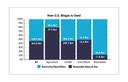
Over half of America’s biogas is used for electricity generation, even as the share upgraded to renewable natural gas has nearly doubled since 2020, according to new data released today by the American Biogas Council.
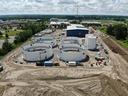
Convertus Group has announced successful financial close of $135 million in project financing for its flagship biofuel facility located in Ontario. The facility is expected to produce between 350,000 and 400,000 gigajoules of RNG annually.

Sasol and Topsoe have announced they will prepare for the orderly operational wind-down of their SAF-focused joint venture, Zaffra, while continuing and enhancing their long-standing technology-led licensing collaboration.

The Senate Agriculture Committee on Aug. 6 failed to advance the Agricultural Act of 2026, commonly referred to as the Farm Bill. Committee members are expected to continue work on the legislation when the Senate reconvenes in mid-September.

Montauk Renewables Inc. on Aug. 5 reported the company’s renewable natural gas (RNG) production increased by 3% during the second quarter. Renewable electricity production expanded by nearly 5% during the three-month period.

Aemetis Inc. on Aug. 6 reported the company achieved 20% revenue growth during the second quarter. During an earnings call, company officials discussed ongoing improvements at the Keyes ethanol plant and plans to expand biogas production.
CHAR Technologies Ltd. on July 28 provided an update on the bio-méthane provence (BMP) project in Gardanne, France, an industrial-scale high-temperature pyrolysis (HTP) project being developed by GazoTech SAS.

Sagepoint Logistics, a subsidiary of Sagepoint Energy, announced on Aug. 5 it has closed a senior secured financing with Power Sustainable Infrastructure Credit Manager L.P. (PSIC) to expand its dedicated truckload carrier fueled by RNG.

KLM, together with SkyNRG and invited guests, on Aug. 5 marked the start of construction of the first facility in the Netherlands fully dedicated to the production of sustainable aviation fuel (SAF).
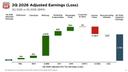
Phillips 66 on Aug. 5 reported the company’s renewable fuel segment achieved significantly higher pre-tax income during the second quarter due to higher regulatory credits from higher pricing and renewable fuels production.
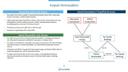
Par Pacific Holdings Inc. released second quarter financial results on Aug. 5, reporting its Hawaii renewable fuels facility ramped up production during the three-month period after commencing operations in April.
U.S. biofuel producers consumed 30.749 billion pounds of feedstock in May, up 10% when compared to April and up 8% when compared to May 2025, according to data released by the U.S. Energy Information Administration on Aug. 5.
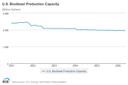
Total operable U.S. biofuels capacity increased slightly in May, with gains for ethanol, according to data released by the U.S. Energy Information Administration on July 31. Biodiesel and renewable diesel capacity were unchanged.

LoCI Controls on Aug. 3 announced the launch of WellWatcher AI-powered Action Plan, a new diagnostic tool that helps landfill operators detect operational issues and opportunities earlier and deploy field resources efficiently.
Advertisement

@ Copyright 2026 - BBI International - All rights reserved.