


On Feb. 5, at the Louisiana Mid-Continent Oil and Gas Association’s annual conference, Louisiana Gov. Jeff Landry announced a $100 million bond allocation for the expansion project at Chevron’s Geismar renewable diesel plant.

Over 440 acres of bottomland hardwood in Montgomery County, North Carolina, have been permanently protected, thanks in part to a grant provided by the Enviva Forest Conservation Fund, according to the U.S. Endowment for Forestry and Communities.
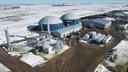
Clean Energy Fuels Corp. announced the successful completion and operational launch of its latest renewable natural gas (RNG) production facility at Tri-Cross Dairy in Viborg, South Dakota.
Proposed Louisiana Green Fuels project pivots to SAF

By Sumitomo Corporation of Americas
February 07, 2024
Strategic Biofuels and Sumitomo Corporation of Americas, a subsidiary of Sumitomo Corp., have entered into a joint development agreement for the proposed Louisiana Green Fuels project in Louisiana, which has now shifted its focus to SAF production.

In order for Minnesota to achieve its greenhouse gas (GHG) emission reduction goals, biofuels must be included in a fuel- and technology-neutral clean transportation standard (CTS), according to the Minnesota Bio-Fuels Association.
Waga Energy Inc., the U.S. subsidiary of the Waga Energy Group, has secured USD $60 million financing with asset manager Eiffel Investment Group to finance the construction of four RNG production units in the U.S.
Two Southern Company Gas subsidiaries, Virginia Natural Gas and Chattanooga Gas, have entered into their first renewable natural gas (RNG) agreement. The deal involves acquiring environmental credits from facilities in Nebraska and Indiana.

Loamist, a climatetech startup, has announced its pre-seed financing and emergence from stealth mode, marking the public release of its Biomass Explorer product, a tool that addresses the critical challenge of accessing biomass.
Clean Fuels Alliance America recognized ASTM International, Darling Ingredients Executive Vice President – Chief Strategy Officer John Bullock, and PepsiCo Inc. with Clean Fuels Awards at the Clean Fuels Conference.
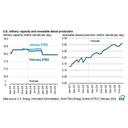
The U.S. Energy Information Administration currently expects renewable diesel production to increase by approximately 30% annually in both 2024 and 2025, according to the agency’s latest Short-Term Energy Outlook, released Feb. 6.

Neste and Amelia, a French regional airline, have closed an agreement for the supply of blended Neste MY Sustainable Aviation Fuel. Amelia has been using the SAF for all its flights departing from Amsterdam Airport Schiphol since Jan. 1.

Future Energy Global, led by former GE Capital Aviation Services Head of Portfolio Strategy Natasha Mann, has launched an innovative financial ecosystem to accelerate the production and uptake of sustainable aviation fuel (SAF).
Black Hills Corp. on Feb. 1 announced that its nonregulated subsidiary, Black Hills Energy Renewable Resources, completed the purchase of a renewable natural gas (RNG) production facility in Dubuque, Iowa.

Emirates has become the first international airline to join The Solent Cluster, a U.K. initiative focused on low carbon investments established to reduce CO2 emissions from industry, transport and households in the South Coast of England.

Drax Group has announced a new partnership with Molpus Woodlands Group. The agreement will provide Drax with an option to purchase sustainably sourced woody biomass to fuel its BECCS operations in the U.S. Southeast.
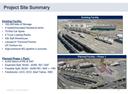
Nevada Gov. Joe Lombardo and the Nevada Governor’s Office of Economic Development on Jan. 25 approved $11.72 million in tax abatements for a 120 MMgy renewable diesel and SAF project under development by Edgewood Renewables LLC.
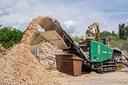
Viably has introduced the Lacero horizontal grinder. This high-speed wood waste grinding machine is engineered to address the stringent requirements of the North American waste and recycling industry.

Aemetis Inc. announced on Feb. 1 the deployment of the entire $25 million of funding provided under the previously announced USDA-guaranteed loan for its Aemetis Biogas 1 LLC (AB1) project company.

Phillips 66 on Jan. 31 confirmed that the renewables conversion of its Rodeo, California, refinery is nearing completion. The facility will shut down crude oil operations in February and is expected to begin producing renewable fuels during Q1 2024.
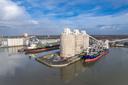
Peel Ports Logistics has signed a deal to become Drax’s new shipping agency service provider for vessels importing biomass into Liverpool. As part of the deal, the company will welcome approximately 50 vessels per year.
Avista recently signed an agreement with Pine Creek RNG to purchase renewable natural gas (RNG) to be produced at the Quad Cities Landfill in Milan, Illinois. Construction on the project is currently expected to be complete by the end of 2024.
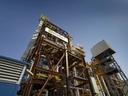
Enerkem announced on Jan. 30 that it will be retiring its Enerkem Alberta Biofuels plant in Edmonton. The company said the facility has achieved its main objective of completing the scale-up of Enerkem’s industry-leading technology.

Enviva Inc. on Jan. 29 announced that on Jan. 23 it received notification from the NYSE that the company is no longer in compliance with NYSE continued listing criteria. The company can regain compliance at any time within the six-month cure period.

Vertex Energy Inc. on Jan. 23 released an operational update, reporting that the renewable diesel production unit at its refinery in Mobile, Alabama, produced approximately 3,900 barrels per day during the fourth quarter of 2023.

Gevo Inc. on Jan. 24 released a business update indicating that the company’s proposed SAF project in South Dakota, Net-Zero 1, remains in the due diligence phase of the U.S. Department of Energy’s loan guarantee program.

Cathay on Jan. 29 welcomed the successful launch of the Hong Kong SAF Coalition as its co-initiator. The coalition is convened and chaired by Business Environment Council, along with 13 founding partners from the SAF value chain.

The USDA Rural Business Cooperative Service on Jan. 24 published proposed rule that aims to update the agency’s Biobased Markets (Biopreferred) Program. A public comment period on the proposed rule is open through March 25.
Valero Energy Corp. released Q4 financial results on Jan. 25, reporting an increase in renewable diesel production volumes despite lower margins. The SAF project under development in Texas remains on schedule for completion next year.
Honeywell announced that Acelen Renewables has selected its Ecofining technology to help support the efficient production of a targeted 20,000 barrels per day SAF and renewable diesel at its facility in Bahia, Brazil.
Praj inaugurates SAF demonstration facility in India

January 27, 2024
Praj on Jan. 20 inaugurated its sustainable aviation fuel (SAF) demonstration plant at its research and development center in Pune, India. The plant utilizes a propriety SAF production technology developed by the company.
Advertisement

@ Copyright 2026 - BBI International - All rights reserved.