


The USDA on Aug. 30 awarded $266 million to 1,334 renewable energy and energy efficiency projects under the Rural Energy for America Program. Biofuel, biobased power, biogas and wood pellet projects are among those that will benefit from the funding.
Bioenergy Devco announced on Sept. 6 that it has received permitting approval for construction of its organics recycling facility at its Bioenergy Innovation Center in Seaford, Delaware. The project will convert food waste into RNG.
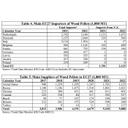
The European Union consumed a record 24.8 million metric tons of wood pellets in 2022, according to a report filed with the USDA FAS's Global Agricultural Information Network. Consumption is expected to grow to 25.6 million metric tons this year.

The Canadian government on Aug. 30 announced it is investing up to $5.3 million in an initiative that aims to support the development of biomass supply chains and cutting-edge technologies to produce biomass and value-added agricultural products.
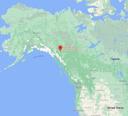
A school located in the south-central region of Canada's Yukon Territory, roughly 250 miles northeast of Juneau, Alaska, will source up to 90 percent of its heat from biomass under an agreement announced on Aug. 22.
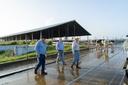
Brightmark RNG Holdings LLC, a joint venture partnership between Chevron U.S.A. Inc. and a subsidiary of Brightmark LLC has announced the delivery of the first renewable natural gas (RNG) from its Larson Project in Okeechobee County, Florida.

A bill introduced in Massachusetts last winter offers a definition of "net zero" builidng that specifically excludes combustion as a means of primary space heating. In mid-July, a bill initially introduced in February by Rep. Simon Cataldo to the 193rd General Court of the Commonwealth of Massachusetts was heard by the Telecommunications, Utilities and Energy Committee. The bill, officially H.3151, offers a definition of “net zero” building initially called for when the Commonwealth established the Office of Energy Resources and outlined its powers and duties.
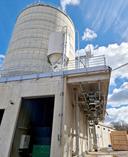
Though it varies based on each individual case, small-scale wood pellet production can be profitable. Since more and more countries are adopting sustainability and renewable energy policies, the wood pellet industry has experienced rapid growth rates. Pellets function as a sustainable alternative to fossil fuels for electricity generation and heating. In recent years, we have repeatedly seen new records set for maximum capacities, which have now reached the seven-figure territory.
From the forest to the sea, a NIU professor is researching the possibility of building the world's first biomass pipeline, an idea with revolutionary potential for the future of biomass transportation. Throughout the years, transportation of large and consistent feedstock has been a limiting factor to biomass’ ability to replace fossil fuels. Mahdi Vaezi, associate professor at Northern Illinois University, has an innovative solution to this problem: hydro-transport of biomass, such as wood chips, wheat straw and sawdust, via pipeline. Now, he and his team are researching what it would take to make the world’s first biomass pipeline a reality.
The Surface Transportation Board is soliciting nominations to fill six vacancies on its Rail Energy Transportation Advisory Committee. One of those vacancies is to be filled by a biofuel producer or feedstock provider.
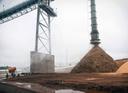
Every day, sites across North America store millions of tons of raw and processed biomass used for a wide range of applications. These piles are several stories high and are constantly moving, piled by front loader or stacker conveyor, lifted with heavy equipment, and loaded for transport—all of which cause dust emissions.
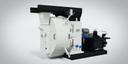
CPM's mission to innovate the pellet mill has resulted in a significant savings in operating costs, as well as a reduction of plants' carbon footprints. As the biomass pellet industry began to take off, it was clear that pelletizing wood was not going to be the same as pelletizing anything else. The consistency and properties of wood cause the pellet mill to run rougher, and requires significantly more power to achieve throughput than most other materials.
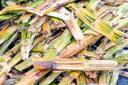
Delta Biofuel will utilize Louisiana's copious sugar industry waste to produce fuel pellets for overseas customers. It was just over two years ago when Jeanerette, Louisiana-based Delta Biofuel and Gov. John Bel Edwards announced that Iberia Parish was under consideration for the site of a first-of-its kind, $70 million renewable fuel plant utilizing bagasse, a byproduct of sugar manufacturing. for fuel pellet production.

The cover of this issue of Pellet Mill Magazine is a bit unconventional being sugarcane bagasse, the waste material that sugar mills end up with post-process.
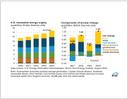
Renewables are expected to account for 22 percent of U.S. electricity generation this year, expanding to 25 percent next year, according to the U.S. Energy Information Administration's latest Short-Term Energy Outlook, released Aug. 8.
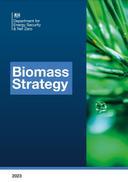
The U.K. government on Aug. 10 released its Biomass Strategy, which describes the steps the government intends to take to strengthen biomass sustainability. It also disucsses how sustainable biomass can be used to meet the U.K.'s net-zero goals.
The U.S. DOE's Bioenergy Technologies Office awarded $2.18 million in funding to three projects as part of the 2023 Cooperative Research and Development Agreement call by the Feedstock-Conversion Interface Consortium.
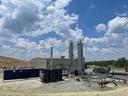
Vision RNG has announced that its landfill gas (LFG) to renewable natural gas (RNG) project at Meridian Waste's Eagle Ridge Landfill in Bowling Green, Missouri is now fully operational. The project produces 375,000 MMBtu of RNG annually.
Synthica Energy LLC, a developer of RNG projects, announced on Aug. 7 that it has closed on a large equity investment from the Infrastructure Business within Goldman Sachs Asset Management. Financial terms of the deal were not disclosed.
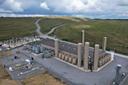
Global sustainable energy producer EDL and key project stakeholders Republic Services, NW Natural Renewables and Pennant Midwest have commenced operations at a renewable natural gas facility (RNG) near Youngstown, Ohio.
Waga Energy has signed a commercial agreement with the Waste Commission of Scott County and Linwood Mining and Minerals Corp. to produce renewable natural gas (RNG) at the Scott Area landfill in Davenport, Iowa.
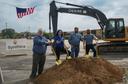
Hamilton RNG Holdings LLC has broken ground on its new food waste digester project, which will produce RNG. The digester is expected to be completed in late 2024 and will process approximately 190,000 tons of food waste annually.
The Coalition for Renewable Natural Gas (RNG Coalition) on July 31 announced that North America now has 300 operational renewable natural gas (RING) facilities, up from just over 30 facilities in 2011 when the RNG Coalition was founded.
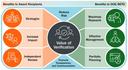
The DOE's BETO often requires FOA award recipients to comply with technical and economic validation of their novel technologies. The agency has released a new set of web resources to help awardees and applicants under the process.
Enerdyne Power Systems, a Landfill Group Company based in Charlotte, has commenced operation of a project collecting and upgrading landfill gas into pipeline quality RNG at the Twin Chimneys Landfill in Honea Path, South Carolina.

Sen. Amy Klobuchar, D-Minn., on July 20 introduced the Biomanufacturing and Jobs Act, which aims to strengthen the USDA's BioPreferred Program. Sens. Joni Ernst, R-Iowa; Debbie Stabenow, D-Mich., and Pete Ricketts, R-Neb., are cosponsoring the bill.
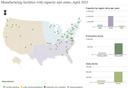
The U.S. Energy Information Administration recently released data showing U.S. manufacturers produced approximately 860,000 tons of densified biomass fuel in April, with sales reaching 610,000 tons.

The U.S. DOE's BETO on will host a Bioenergy Cybersecurity Workshop on Sept. 11. The virtual event will focus on the identification of cybersecurity risks in biofuel and bioproduct manufacturing as well as ways to address those risks.

ENplus on June 22 announced the launch of its 2023 market surveillance project is and urging stakeholders, individuals and other parties to support the project by submitting samples of ENplus-certified wood pellets.
Aker Carbon Capture has been awarded an integration feasibility study by Sweden-based Söderenergito implement carbon capture at Igelstaverket, the country's second largest biomass-fired combined-heat-and-power (CHP) plant.
Advertisement

@ Copyright 2026 - BBI International - All rights reserved.