


Plug Power Inc. on Oct. 23 announced a strategic partnership with Edgewood Renewables to support the development and construction of its advanced renewable fuel facility in North Las Vegas, Nevada, that will produce SAF and renewable diesel.

Neste Corp. on Oct. 29 announced sales of SAF reached a record 251,000 metric tons during Q3. The company’s renewable products segment reported improved EBTIDA, comparable sales margins and sales volumes for the three-month period.

Phillips 66 doubled its production of SAF during the Q3 and expects additional increases in production to be realized in Q4, according to statements made during the company’s third quarter earnings call on Oct. 29.

In another landmark step toward maritime decarbonization, Anew Climate and Seaspan Energy have successfully completed their first ship-to-ship loading operation of renewable liquefied natural gas (Bio-LNG) in the Port of Long Beach, California

The Alliance for Green Heat has been awarded $75,370 from FEMA to reduce fire risk in vulnerable wood-heated homes. The project is the nation’s first fire prevention and safety program targeting firewood banks and wood-burning households.
The International Biomass Conference & Expo and the American Boiler Manufacturers Association BOILER Expo are joining forces in 2026 for an unprecedented colocation event in Nashville, Tennessee, March 31 – April 2, 2026.

Parkland Corp. released Q3 results on Oct. 27, reporting that the volume of biobased feedstock co-processed at its Burnaby Refinery was up 50%. The company also announced its previously announced purchase by Sunoco LP is expected to close Oct. 31.

The Washington Department of Ecology is working to develop a programmatic environmental impact statement for SAF that will provide a foundation for future project-level environmental reviews. A public comment period is open through Nov. 5.

The U.K. Department for Transport on Oct. 16 confirmed it will implement a revenue certainty mechanism for SAF in the form of an aviation fuel supplier levy. The agency is currently seeking public comments regarding implementation details.

Some of the biogas captured from the Yolo County Landfill in California is now certified carbon negative by CARB, thanks to the use of LoCI Controls’ technology and the ABC’s Biogas Carbon Accounting Tool.
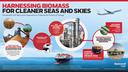
Honeywell on Oct. 28 introduced its new Biocrude Upgrading process technology, which converts agricultural and forestry waste into ready-to-use renewable fuels, including marine fuels, gasoline and SAF.

Steel Dynamics Inc. on Oct. 27 announced lower-embodied-carbon steel product offerings, BIOEDGE and EDGE, to support customers in achieving their greenhouse gas emissions reduction and sustainability initiatives.
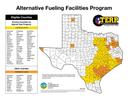
The Texas Commission on Environmental Quality of offering $12 million in grants to support the development of alternative fueling facilities to supply CNG, LNG, hydrogen, biodiesel blends of B20 or greater, propane, electricity or methanol.
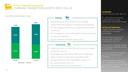
Italy-based energy company Eni on Oct. 24 released Q3 results, reporting that its Enilive business segment processed 315,000 metric tons of biobased feedstock during the three-month period, up 14% when compared to the same period of 2024.

More than two dozen federal lawmakers on Oct. 20 sent a letter to U.S. Treasury Secretary Scott Bessent urging his agency to finalize guidance for the 45Z clean fuel production credit, as amended by the One Big Beautiful Bill earlier this year.

SJI and OPAL Fuels celebrated the ribbon cutting of their Atlantic County Utilities Authority’s renewable natural gas (RNG) project in Egg Harbor Township, New Jersey. The RNG facility will capture and process landfill gas into RNG.
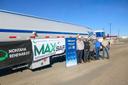
Montana Renewables, in collaboration with Calumet Montana Refining, has commissioned onsite blending and shipping facilities to offer a nominal 50/50 blend of renewable and fossil jet fuel certified under ASTM D7566 and ASTM D1655 specifications.
EIA: US biofuels production capacity growth slowed in 2024
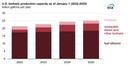
By U.S. Energy Information Administration
October 27, 2025
The pace of capacity additions for U.S. biofuel production slowed in 2024, with production capacity increasing by a modest 3% from the start of 2024 to the start of 2025, according to the EIA's latest biofuels production capacity reports.


Norwegian Cruise Line Holdings Ltd. and Repsol on Oct. 20 announced a landmark 8-year agreement to supply renewable marine fuels at the Port of Barcelona, establishing an unprecedented long-term relationship within the cruise industry.

Par Pacific Holdings Inc. on Oct. 21 announced the successful closing of Hawaii Renewables LLC, a joint venture to construct a renewable fuels facility and produce renewable fuels at Par Pacific’s refinery in Kapolei, Hawaii.
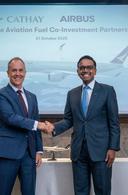
Airbus and the Cathay Group on Oct. 21 announced a joint investment of up to US$70 million to accelerate the development of sustainable aviation fuel (SAF) production in Asia and globally.

Valero Energy Corp. on Oct. 23 released Q3 results, reporting a profitable three-month period for its ethanol segment on record high production. Valero’s renewable diesel segment, which also includes SAF, reported a loss for the quarter.
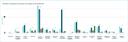
The Global CCS Institute on Oct. 9 released its Global Status of CCS 2025 report, which shows progress in the CCS sector continues despite global headwinds, with seven new biofuel and bioenergy CCS projects currently under construction.

ENplus is celebrating its 15th anniversary. Since 2010, ENplus has played a defining role in shaping a reliable and transparent pellet market, ensuring that consumers and businesses can trust the quality of every certified pellet they use.
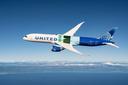
Neste and United Airlines have expanded their existing partnership to supply SAF to three new major airports in the U.S., including George Bush Intercontinental Airport, Newark Liberty International Airport, and Dulles International Airport.
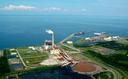
New Brunswick’s Belledune Generating Station is testing advanced wood pellets to lower emissions and extend its operating life.
Advertisement

@ Copyright 2026 - BBI International - All rights reserved.