


Aemetis Inc. released Q3 results on Nov. 6, reporting increased RNG capacity and higher capacity utilization at the company’s California ethanol plant. Aemetis also provided an update of biodiesel, SAF and CCS projects.

Clean Fuels Alliance America on Nov. 7 urged the U.S. EPA to quickly finalize the overdue Renewable Fuel Standard rule for 2026 and 2027 and to fully reallocate all granted and expected small refinery exemptions.
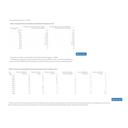
The U.S. EPA on Nov. 7 issued decisions on 16 small refinery exemption (SRE) petitions filed by eight small refineries. The agency granted full exemptions to two petitions, partial (50%) exemptions to 12 petitions, and denied two petitions.

University of British Columbia researchers have identified a previously unknown bacterium in the Natronincolaceae family that plays a crucial role in the process of converting food waste into renewable natural gas (RNG).

Neste is marking two significant milestones: the 15th anniversary of its renewable products refinery in Singapore and the 60th anniversary of its Porvoo refinery in Finland. Both facilities currently produce renewable fuels.

XCF Global Inc. on Nov. 3 announced a memorandum of understanding (MOU) with Impact Jets LLC, a private aviation platform, to accelerate sustainable aviation fuel (SAF) adoption across the private jet market.
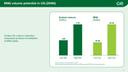
Clean Energy Fuels Corp. sold 61.3 million gallons of renewable natural gas (RNG) during the third quarter, up 3% when compared to the same period of last year, according to information released by the company on Nov. 4.
The Fonds de solidarité FTQ Bioénergie is partnering with Keridis BioEnergy, a Québec-based company specializing in the development, financing and operation of agricultural biomethanation plants that produce RNG and biofertilizers in Québec.

Topsoe has been selected to deliver its HydroFlex, SynCOR and H2bridge technologies, as well as catalysts and equipment, for NXTClean Fuels’ Port Westward project in Clatskanie, Oregon, to produce SAF and renewable diesel.

Drax Group plc on Nov. 5 confirmed it has signed a contract with the U.K. government that will provide transitional support for all four of the biomass units at Drax Power Station from April 2027 through March 2031.

The European Commission on Nov. 5 unveiled its Sustainable Transport Investment Plan, an initiative that aims to rapidly accelerate the energy transition in aviation and marine sectors, including through the use of SAF and marine biofuels.

Ahead of COP30, 30 leading industrial and utilities companies are calling on the Green House Gas Protocol to explicitly recognize market-based instruments for renewable gases such as biogas and renewable natural gas (RNG).

Vanguard Renewables on Nov. 3 announced the acquisition of Complete Beverage Destruction, a Florida-based beverage waste recycling facility. The move accelerates the company's expansion into the state
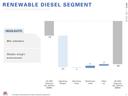
Marathon Petroleum Corp. on Nov. 4 announced its renewable diesel segment achieved increased capacity utilization during the third quarter. The segment, however, reported a significant EBTIDA loss on weak margins.
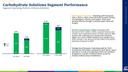
ADM on Nov. 4 released Q3 financial results, reporting a profitable three-month period for its ethanol operations on improved margins. Overall company operations, however, were negatively impacted by biofuel policy and trade uncertainty.

The U.S. EPA on Oct. 29 announced it will reopen a comment period related to a proposed extension of an information collection request (ICR) focused on provisions regarding biointermediates under the Renewable Fuel Standard.

PowerWood Canada Corp. on Nov. 3 announced it is progressing with plans to build two facilities in Northern Alberta which will convert forest fire deadwood into biofuel used to replace coal in Japanese power plants.

Anaergia Inc., through its subsidiary, Anaergia S.r.l., entered into a joint venture (JV) with Tozzi Sud and Isolmec Group to build a new anaerobic digestion facility for BioHold in Basilicata, southern Italy.

Officials in Nebraska and Iowa have expressed concerns that the U.S. EPA’s planned repeal of its Greenhouse Gas Reporting Program could negatively impact the ability of biofuel producers to access 45Q and 45Z tax credits.

The attorneys general of Iowa, Nebraska and South Dakota have asked leadership at four federal agencies to investigate small refiners that may be manipulating the RFS small refinery exemption (SRE) program to achieve a financial “windfall.”
The U.S. EPA has announced the agency will no longer update program content associated with its Burn Wise program, effective Oct. 30, 2025. The implementation of indoor air woodstove program initiatives is not expected to be impacted.

The European Union Aviation Safety Agency published the first ReFuelEU Aviation Annual Technical Report, laying out the initial picture of how SAF are being supplied, purchased and used across the European Union.

Representatives of the U.S. biofuels industry urged the U.S. EPA to fully reallocate RVOs waived via small refinery exemptions (SREs) under the RFS in comments filed with the agency ahead of an Oct. 31 deadline.

Clean Energy Fuels Corp. announced a series of new agreements with customers across the country expanding their use of ultraclean, affordable renewable natural gas (RNG). The company also grew its customer base for bulk liquefied natural gas (LNG).

Australia Department of Defence’s Pacific Support Vessel, ADV Reliant, has achieved a major milestone in strengthening the nations fuel resilience by refueling with renewable diesel for the first time.
XCF Global Inc. has signed a binding term sheet with New Rise Australia Pty. Ltd. (New Rise AU) to accelerate the development of biorefineries in Australia. New Rise AU is expected to build and operate at least three SAF facilities.

PBF Energy Inc. on Oct. 29 announced the St. Bernard Renewables facility produced approximately 15,400 barrels per day of renewable diesel during the third quarter. Production is expected to expand slightly during the final quarter of the year.

CVR Energy Inc. on Oct. 29 announced plans to revert the renewable diesel unit at its refinery in Wynnewood, Oklahoma, back to hydrocarbon processing service during the next scheduled catalyst change in December.

Rep. Mike Thompson, D-Calif., on Oct. 28 introduced a bill that aims to reinstate many of the renewable energy tax credits eliminated by the One Big Beautiful Bill, including the reinstatement of the 45Z clean fuel production credit “special rate” for SAF.

Eni and the Bioenergy Association for Sustainable Development, affiliated with the Ministry of Environment of the Arab Republic of Egypt, have announced plans to prepare a comprehensive feasibility study for establishing biogas production units.
Advertisement

@ Copyright 2026 - BBI International - All rights reserved.