


The Iowa Renewable Fuels Association announced that Iowa's 41 ethanol plants produced 3.7 billion gallons during 2012, matching 2011 production. It's estimated the state will have produced about 28 percent of U.S. ethanol in 2012.

Japanese imports of U.S. dried distillers grains with solubles (DDGS) have increased fairly steadily since 2004, reaching an all-time high in 2012, according to a chart from U.S. Grains Council.

Joint BioEnergy Institute researchers are exploring new ways to meet the challenge of recalcitrant cellulosic feedstocks and lower the cost of biofuels. They recently published two papers detailing their work to genetically modify xylan and lignin.

Georgia-based torrefied pellet developer, Vega Biofuels, has announced plans to ship samples to European power companies for testing by the end of January. The company first announced its plans to ship torrefied pellets to Europe in March.

In late December the U.S. Energy Information Administration released its latest monthly energy statistics. The most recent Fuel Ethanol Overview includes data gathered for the first nine months of 2012.

New York Gov. Andrew Cuomo has announced $250 million in funding for biomass-based electricity generation projects and other renewable energy installations as part of the state's renewable portfolio standard (RPS).

Western Plains Energy LLC is preparing to start up an anaerobic digestion system. When full capacity is reached in March, the digesters will produce enough methane to completely refire the plant's thermal oxidizer and boiler.

Amyris Inc., a leading renewable chemicals and fuels company, has announced it has completed a $42.25 million private placement of its common stock. The company also began production of Biofene, a renewable farnesene, in Brazil.

The Placer County Planning Commission has voted to approved a conditional use permit for the 2 MW Cabin Creek Biomass Facility and certify the environmental impact report for the proposed plant. The facility will be located near Lake Tahoe, Calif.
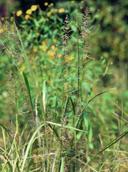
Joint BioEnergy Institute researchers are exploring new ways to meet the challenge of recalcitrant cellulosic feedstocks and lower the cost of biofuels. They recently published two papers detailing their work to genetically modify xylan and lignin.

Western Plains Energy LLC is preparing to start up an anaerobic digestion system. When full capacity is reached in March, the digesters will produce enough methane to completely refire the plant's thermal oxidizer and boiler.

Germany-based enzyme developer Direvo Industrial Biotechnology GmbH has announced the successful scale-up of its BluZy-D and BluZy-P enzymes in collaboration with researchers at Iowa State University.

Work to understand cellulose production at the University of Virginia School of Medicine that may help hospitals battle bacterial infections could also have a significant impact on advanced biofuel production.

Researchers at Clemson University's Pee Dee Research and Education Center and ArborGen Inc. have collaborated to plant thousands of poplars at the Pee Dee center to determine if certain varieties of the tree are suitable for bioenergy stock.

Australia-based Cardia Bioplastics Ltd. has announced an exclusive annual supply contract with the Shanghai Pudong City District in China to supply an estimated $1.2 million worth of its Biohybrid waste bags to 20 percent of area households.

A series of articles published as a special issue on biofuels by the Forest Products Journal highlights the relative impact of 15 different uses of biofuels on reducing CO2 emissions and increasing energy independence.
Amyris gains more financing, begins Biofene production in Brazil

By Amyris Inc.
December 27, 2012
Amyris Inc. announced it has completed a $42.25 million private placement of its common stock. In addition, the company announced its purpose-built industrial fermentation facility in Brazil has successfully begun production of renewable farnesene.

U.S. EPA Administrator Lisa Jackson has announced she will resign following President Obama's State of the Union address, which is scheduled for Jan. 24. Jackson did not cite a reason for her departure.

Day after day, legions of microorganisms work to produce energy from waste in biogas plants. Researchers from Bielefeld University's Center for Biotechnology are taking a close look to find out which microbes do the best job.
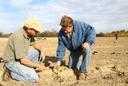
Researchers at Clemson University's Pee Dee Research and Education Center and ArborGen Inc. have collaborated to plant thousands of poplars at the Pee Dee center to determine if certain varieties of the tree are suitable for bioenergy stock.
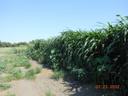
Sorghum is poised to come into its own as an alternative to corn. It proved its mettle in the 2012 drought, producing decent dryland yields with very little rainfall, and EPA's pathway approval for sorghum ethanol should open new markets.

U.S. EPA Administrator Lisa Jackson has announced she will resign following President Obama's State of the Union address, which is scheduled for Jan. 24. Jackson did not cite a reason for her departure.

Three court proceedings challenging several state and local approvals permitting the development and operation of Taylor Biomass Energy's 21 MW biomass gasification facility in Montgomery, N.Y., have been dismissed.
DOE opens bio-oil funding opportunity

December 26, 2012
The U.S. DOE has opened up a funding opportunity for bio-oil research activities. The funding will focus on three barriers to bio-oil production: carbon efficiency, hydrogen efficiency and separations efficiency.
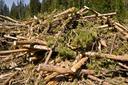
Biofuels made from high-yield, short rotation woody crops or from forest residuals and thinnings that are currently left unused have substantial potential to reduce CO2 emissions as well as to contribute to energy independence.
Advertisement

@ Copyright 2026 - BBI International - All rights reserved.