


The USDA reduced its forecast for 2022-'23 corn use in ethanol in its latest World Agricultural Supply and Demand Estimates report, released Oct. 12. The agency also slightly lowered its estimate for 2021-'22 corn use in ethanol.

UNICA, the Brazilian sugarcane industry association, has announced that sugarcane processing by mills in the country's south-central region was up during the first half of September. Ethanol production was also up, but ethanol sales were down.

U.S. ethanol and biodiesel capacity were down slightly in July. Renewable diesel capacity, however, continued to expand and is poised to surpass operatable biodiesel capacity, according to data released by the U.S. EIA.

TrustBIX Inc. is launching a biomass traceability pilot project with members of the BQNC. The project will demonstrate importance of biomass traceability for assuring product quality and important production attributes throughout the supply chain.

The USDA recently released its Grain Crushings and Co-Products Production report for September, reporting that corn use for fuel ethanol production in July was down 1 percent when compared to July 2021, but up slightly when compared to June.

The Canadian government is seeking proposals for projects that will support the establishment of biomass supply chains to ensure that a steady and usable supply of sustainable feedstock is available to clean fuel production facilities.

Nuseed and GranBio have entered into a long-term strategic alliance to accelerate R&D and commercialization into global energy cane markets. Nuseed also acquired GranBio's energy cane breeding and commercial assets, and R&D program.

UNICA, the Brazilian sugarcane industry association, has released updated data showing that ethanol production by mills in the country's south-central region was down slightly in late August. Ethanol sales for the full month, however, were up.

A report filed with the USDA Foreign Agricultural Service's Global Agricultural Information Network indicates that China's ethanol blend rate is expected to reach only 1.8 percent this year as support wanes for previously announced biofuel policies.

Gevo Inc. on Sept. 19 announced that the USDA has selected the company's Climate-Smart Farm to Flight proposal for funding with an award ceiling of up to $30 million. The award was made under the Partnerships for Climate-Smart Commodities program.

CropEnergies AG is considering reducing production at its ethanol plants in response to rising production costs. The company is also branching out with recent acquisitions of renewable energy and biobased chemical companies.

When lab personnel aren't ushering in new innovations, testing ethanol fermentations and producing real-time production data for their colleagues, they're making sure what's arriving at the gate is fit for today's production needs.

The U.S. EPA has announced it will hold a virtual public workshop on Sept. 29 that focuses on the new biointermediates provisions of the Renewable Fuel Standard program. Attendees must preregister by Sept. 27.

President Joe Biden on Sept. 15 announced a tentative agreement has been reached between rail companies and labor unions that is expected to avert a rail strike that would have caused massive disruption in the U.S.

The DOE has announced $178 million for bioenergy research to advance sustainable technology breakthroughs that can improve public health, help address climate change, improve food and agricultural production, and create resilient supply chains.

The USDA on Sept. 14 announced it is investing up to $2.8 billion in 70 selected projects under the first pool of the agency's Partnerships for Climate-Smart Communities funding opportunity. Projects include those addressing RNG and SAF.

Global Partners LP has received final approvals to expand storage capacity and transload renewable feedstocks at its Clatskanie, Oregon terminal, CPBR. The facility handles ethanol, renewable diesel, and renewable feedstocks.

The White House hosted an event Sept. 13 to celebrate the Inflation Reduction Act, which was signed by President Biden on Aug. 16. Biden also issued an executive order on the implementation of the energy and infrastructure provisions of the IRA.
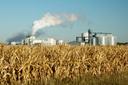
The USDA reduced both its forecast for 2022-'23 corn use in ethanol and its estimate for 2021-'22 corn use in ethanol in its latest World Agricultural Supply and Demand Estimates report, released Sept. 12.

The USDA released its latest Crop Production report on Sept. 12, predicting an 8 percent decline in corn production when compared to last year. Expected corn yields are down when compared to both last month's estimate and last year's yields.

Fuel ethanol demand in the Philippines is expected to increase by 13 percent in 2022, with imports expected to grow by 33 percent, according to a report filed with the USDA Foreign Agricultural Service's Global Agricultural Information Network.

A U.S. Grains Council team traveled to Brazil in August to learn about the market potential Brazilian corn ethanol has domestically and globally and about logistics faced by U.S. ethanol exporters to Brazil.

Shell Brazil on Sept. 1 announced it has signed a cooperation agreement with RaÃzen, Hytron, University of São Paulo and SENAI CETIQT for the construction of two plants to produce renewable hydrogen (H2) from ethanol.

Mississippi State scientists have developed three switchgrass varieties that are ready for commercial use. The university is working with Roundstone Native Seed Co. to deliver the “Robusto,� “Espresso,� and “Tusca� switchgrass varieties.

UNICA, the Brazilian sugarcane industry association, has announced that sugarcane processing and ethanol production were both down during the first half of August. Ethanol sales were also down during the two-week period.

A public comment period on Washington's proposed Clean Fuel Standard closed Aug. 31. The program aims to incentivize fuel suppliers to reduce the carbon intensity of transportation fuels by 20 percent by 2038.

The DOE on Aug. 31 announced $46 million for 22 projects that will create biofuel energy to help decarbonize the transportation and power generation sectors. The projects include those focused on waste conversion, carbon capture and algae.

U.S. operable biofuel production capacity expanded to 21.58 billion gallons per year in June, up 125 MMgy when compared to May, according to data released by the U.S. Energy Information Administration on Aug. 31. Feedstock consumption was also up.

The USDA's Commodity Credit Corp. announced on Aug. 30 that it does not expect to purchase and sell sugar under the Feedstock Flexibility Program for crop year 2021, which runs from Oct. 1, 2021 through Sept. 30, 2022.

Rex American Resources on Aug. 30 released financial results for its fiscal Q2, reporting increased net sales and revenue. Moving into Q3, operations currently remain profitable but the company is facing increased challenges.
Advertisement

@ Copyright 2026 - BBI International - All rights reserved.