


Fuel ethanol consumption in Canada is expected to grow by approximately 8.6 percent this year, according to a report filed with the USDA. Imports of U.S. fuel ethanol are expected to reach a record 1.5 billion liters (396.26 million gallons).
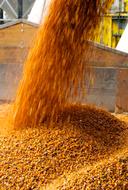
The USDA recently released its Grain Crushings and Co-Products Production report for August, reporting that corn use for fuel ethanol production in June was down when compared to the previous month, but up when compared to June 2021.

Brazil-based CB Bioenergia plans to develop a 10 MMly (2.64 MMgy) ethanol plant in Rio Grande do Sul, according to a statement released by the state government on Aug. 23. The facility will process wheat, triticale and corn feedstock.

UNICA, the Brazilian sugarcane industry association, has released data showing that sugarcane processing and ethanol production by mills in the south-central region of the country was up during the second half of July.

The Low Carbon Fuels Coalition on Aug. 7 sent a letter to the California Air Resources Board urging the agency to recognize farming practices and other methods of climate smart agriculture (CSA) in its upcoming Low Carbon Fuel Standard rulemaking.

President Joe Biden on Aug. 16 signed the Inflation Reduction Act into law, calling the legislation the "biggest step forward in climate—ever" and stressing it will allow the U.S. to boldly take additional steps towards meeting its climate goals.

Bayer on Aug. 15 announced the launch of ForGround, a farmer-first digital platform that will transform the way farms of all sizes can more easily make the transition to sustainable agricultural practices.

Thailand's consumption of fuel ethanol is expected to increase in 2022, but remain below pre-COVID levels, according to a report filed with the USDA Foreign Agricultural Service's Global Agricultural Information Network.

U.S. corn production for 2022 is expected to reach 14.4 billion bushels, down 5 percent when compared to last year, according to the USDA National Agricultural Statistics Service's latest Crop Production report, released Aug. 12.

The USDA reduced its estimate for 2021-'22 corn use in ethanol by 25 million bushels in its latest World Agricultural Supply and Demand Estimates report, released Aug. 12. The forecast for 2020-'23 corn use in ethanol was maintained.

The House on Aug. 12 voted 220 to 207 to pass the Inflation Reduction Act, a legislative package that includes a wide range of provisions that benefit the biofuel and bioenergy industries. President Biden is expected to sign the bill soon.

BBI International has announced the 39th Annual International Fuel Ethanol Workshop & Expo will be held June 12-14, 2023 at the CHI Health Center in Omaha, Nebraska. Speaker presentation abstracts will be accepted through Feb. 10, 2023.

In a recently signed contract, ICM, Impacto Energia S/A and its sister company, Impacto Bioenergia, have agreed to build a new dry-mill ethanol production facility in Bahia, Brazil, with an estimated Q1 2025 start date.

UNICA, the Brazilian sugarcane industry association, has announced ethanol production during the first half of July was up when compared to the same period of last year. Ethanol sales were up also up slightly during the two-week period.

U.S. operatable biofuels production capacity was down slightly in May, according to data released by the U.S. Energy Information Administration on July 29. Feedstock consumption, however, was up when compared to both the prior month and May 2021.

The Andersons Inc. on Aug. 2 announced the company achieved record quarterly results during Q2 2022. The company's renewables segment, which includes its ethanol operations, generated record pretax income for the three-month period.

The Nebraska ethanol industry produced over 2.25 billion gallons in 2019, resulting in a value of production for ethanol and co-products of greater than $4.04 billion, according to a new University of Nebraska–Lincoln study.

UNICA, the Brazilian sugarcane industry association, has released new data showing that sugarcane processing and ethanol production were both down in during the second half of June. Ethanol sales were also down slightly.

The USDA recently released its Grain Crushings and Co-Products Production report for July, reporting that corn use for fuel ethanol production in May was up when compared to the previous month, but down when compared to May 2021.

Germany's Verbio has unveiled its first North American biorefinery in Iowa. After completion of its second phase of construction next year, it will produce both RNG and ethanol. The biogas is cellulosic, the alcohol will be corn derived.

Ethanol consumption in the European Union was up an estimated 5.5 percent last year, surpassing the pre-COVID level of 2019 and setting a new record. EU ethanol consumption is expected to expand an additional 2.3 percent this year.

The U.S. ethanol industry delivered a very strong Q2, according to the latest quarterly report issued by CoBank's Knowledge Exchange on July 14. Ethanol profits and production remain robust despite record gas prices, according to the report.

In a move designed to provide additional, efficacious solutions for growers of traditional row crops, Certis Biologicals and Novozymes are jointly developing their technologies as solutions for highly effective control of fungal disease.

The USDA maintained its forecast for 2022-'23 corn use in ethanol in its latest World Agricultural Supply and Demand Estimates report, released July 12. The 2022-'23 corn outlook is for increased supplies and higher ending stocks.

A new corn germplasm resource developed by Agricultural Research Service scientists in Wooster, Ohio, is now available to use for breeding commercially grown varieties that can withstand the synergistic viral disease, maize lethal necrosis (MLN).

Decarbonizing agriculture is critical for the U.S. to reach net zero emissions by 2050. A new data-driven approach looks at practices that are good for the earth and profitable for farmers, according to Argonne National Laboratory.

UNICA, the Brazilian sugarcane industry association, has announced ethanol production picked up during the first half of June. Total production for the current harvest season, however, is down when compared to last year.

U.S. operable production capacity for ethanol and renewable diesel expanded in April, while biodiesel capacity fell slightly, according to data released by the U.S. EIA on July 5. Feedstock consumption was up when compared to April 2021.

The USDA recently released its Grain Crushings and Co-Products Production report for June, reporting that corn use for fuel ethanol in April was down when compared to the previous month, but up when compared to April 2021.

U.S. farmers have planted an estimated 89.9 million acres of corn in 2022, down 4 percent when compared to last year, according to the USDA National Agricultural Statistics Service's Acreage report, released June 30.
Advertisement

@ Copyright 2026 - BBI International - All rights reserved.