

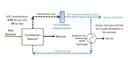
Advanced Torrefaction Systems and HM3 Energy combine technologies to address high chemical oxygen demand levels in leachate and potential for self-heating in biocoal.

Understanding the risks of anaerobic digester hydrogen sulfide accumulation can improve safety and efficiency at renewable natural gas facilities.


Ameresco Inc. on Oct. 19 announced that it achieved commercial operation at its landfill gas to RNG plant at Republic Services’ Benson Valley Landfill in Frankfort, Kentucky. The facility is capable of processing 2,000 scfm of raw landfill gas.

Frontline BioEnergy has achieved a breakthrough in syngas quality for biomass gasification at its new pilot facility located in Nevada, Iowa. The innovative technology, called TarFreeGas, has produced ultra-clean biomass-derived synthesis gas.

A conversation with Lauren Aubry, lab manager with Marquis Energy, on new advancements in the lab, helpful technology and challenges lab managers and technicians face daily.
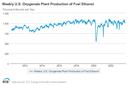
U.S. fuel ethanol production was up nearly 1 percent the week ending Sept. 1, according to data released by the U.S. Energy Information Administration on Sept. 7. Ethanol stocks were up slightly, with exports up nearly 19 percent.

Rex American Resources Inc. on Aug. 30 announced sales were down during its fiscal second quarter, the three months ending July 31. During an earnings call, company officials discussed planned capacity expansion and CCS projects.

POET has reopened its bioprocessing facility in Cloverdale, Indiana. POET Bioprocessing – Cloverdale celebrated the occasion on Aug. 31 with an event at the facility that included area farmers, community members, and state officials.
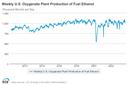
U.S. fuel ethanol production fell by nearly 4 percent the week ending Aug. 25, according to data released by the U.S. EIA on Aug. 30. Stocks of fuel ethanol were down more than 5 percent and exports were down nearly 27 percent.
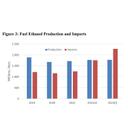
Canadian fuel ethanol consumption increased approximately 20 percent last year while Canadian imports of fuel ethanol produced in the U.S. were up an estimated 40 percent, according to a report filed with the USDA.
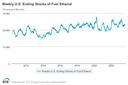
U.S. fuel ethanol production was down 2 percent the week ending Aug. 18, according to data released by the U.S. Energy Information Administration on Aug. 23. Ethanol stocks were down nearly 3 percent while exports were up 19 percent.

Fluid Quip Technologies has announced that its patented Distillers Corn Oil (DCO) Technology is achieving record distillers corn oil yields for Ace Ethanol in Stanley, Wisconsin, with increases of over 20 percent above historical rates.

The U.S. Department of Energy's national laboratories are helping companies advance sustainable aviation fuel (SAF) technologies by offering customizable pilot plants, laboratory equipment, and even supercomputers.
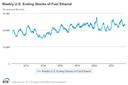
U.S. fuel ethanol production was up nearly 5 percent the week ending Aug. 11, according to data released by the U.S. Energy Information Administration on Aug. 16. Ethanol stocks were up more than 2 percent, with exports up more than 14 percent.

U.S. fuel ethanol production was down 4 percent the week ending Aug. 4, according to data released by the U.S. Energy Information Administration on Aug. 9. Stocks of fuel ethanol were up slightly, while ethanol exports were down 51 percent.

Whitefox Technologies has announced that Glacial Lakes Energy LLC has agreed to install the Whitefox ICE membrane dehydration system at its ethanol plant located in Mina, South Dakota. Installation is expected to be complete by Q2 2024.

Bryan McGregor, president and CEO of Alto Ingredients Inc., discussed the company’s financial and operational performance during a second quarter earnings call held Aug. 7. He said Alto is pleased by the market’s continued improvements during the period.

Green Plains Inc. released second quarter financial results on Aug. 4, reporting the company was negatively impacted during the three-month period due to the temporary shutdown of its Wood River, Nebraska, facility and additional planned and unplanned downtime at other locations.

The Andersons Inc. held a second quarter financial earnings call on Aug. 2, reporting that ethanol crush margins strengthened over the three-month period. The current margin outlook, despite volatility, remains strong, according to the company.

European ethanol producer CropEnergies has announced plans to invest more than EUR 100 million in various projects at its ethanol plant in Wilton, U.K. The investments will increase plant profitability and reduce CO2 emissions.

UNICA, the Brazilian sugarcane industry association, has announced sugarcane processing and ethanol production by mills in the south-central region of the country were both up during the first half of July.
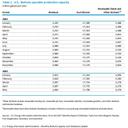
Operable biofuels production capacity in the U.S. fell slightly in May, with reductions for both ethanol and biodiesel, according to date released by the U.S. EIA on July 31. Feedstock consumption was up from both the previous month and May 2022.

Valero Energy Corp. released second quarter financial results on July 27, reporting improved operating income for both its renewable diesel and ethanol business segments. The company also said its SAF project is progressing on schedule.
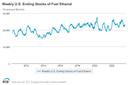
U.S. fuel ethanol production was up 2 percent the week ending July 21, according to data released by the U.S. Energy Information Administration on July 26. Stocks of fuel ethanol were up slightly while exports were unchanged from the previous week.
UNICA, the Brazilian sugarcane industry association, has announced sugarcane process was up during the second half of June. Ethanol production was down for the two-week period, while ethanol sales were up for the full month.

U.S. fuel ethanol production expanded by nearly 4 percent the week ending July 14, according to data released by the U.S. Energy Information Administration on July 19. Stocks of fuel ethanol were up 2 percent while exports were up 69 percent.

The U.S. DOE's BETO on will host a Bioenergy Cybersecurity Workshop on Sept. 11. The virtual event will focus on the identification of cybersecurity risks in biofuel and bioproduct manufacturing as well as ways to address those risks.

U.S. fuel ethanol production fell by nearly 3 percent the week ending July 7, according to data released by the U.S. EIA on July 12. Weekly ending stocks of fuel ethanol were up 2 percent while exports were down 36 percent.

Total operable biofuels production capacity in the U.S. expanded in April, according to data released by the U.S. Energy Information Administration on June 30. Feedstock consumption was up when compared to the same month of last year.
Advertisement

@ Copyright 2026 - BBI International - All rights reserved.