


Anaergia Inc. announced on Oct. 1 that certain of its affiliates, together with IIF Anaergia HoldCo LLC (North Sky), have entered into a definitive master purchase agreement for facilities in North Carolina and Rhode Island.

EcoCeres has announced a partnership to supply hydrotreated vegetable oil (HVO) to AstraZeneca for use at its medicines manufacturing facility in Wuxi, Jiangsu Province, China. The renewable fuel will support backup power generation at the site.

CPM on Oct. 2 announced that Jeremy Patten has joined the company as CEO. Patten brings more than 20 years of leadership experience across global industrial, manufacturing and technology-driven businesses.

Three lawmakers were honored on Sept. 23 by The Transport Project for their outstanding contributions toward the advancement of RNG as a transportation fuel at the organization’s annual Fly-In and Public Policy Days in Washington.
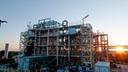
Alder Renewables’ integrated industrial pilot has surpassed 1,000 hours of continuous operation, demonstrating sustained production of on-spec Alder renewable crude (ARC) from commercially produced woody biomass pyrolysis oil.
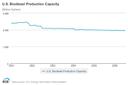
Total U.S. operatable biofuels production capacity expanded by 38 MMgy in July, with gains for both ethanol and renewable diesel, according to data released by the U.S. Energy Information Administration on Sept. 30.

U.S. biofuel producers consumed 31.275 billion pounds of feedstock in July, up nearly 3% when compared to June and up nearly 7% when compared to July 2025, according to data released by the U.S. Energy Information Administration on June 30.
A coalition of stakeholders on Sept. 14 sent a letter to leaders of the European Commission urging them to resist pressure to allow electrolytic hydrogen used an intermediate processing input to be counted towards the EU’s e-SAF requirement.

Waga Energy is continuing its expansion in Spain with the signing of an agreement with FCC Medio Ambiente for a new biomethane production project in Alhendín, Andalusia. The project convert biogas captured at the landfill into biomethane.
Rayonier Advanced Materials Inc. on Sept. 30 announced that construction is underway on Altamaha Green Energy, a 70 MW biomass cogeneration project adjacent to the company’s Jesup, Georgia, manufacturing facility.

The Cardano Foundation, the independent, Swiss-based not-for-profit organization dedicated to advancing Cardano as public digital infrastructure, on Sept. 30 announced two new initiatives with Petrobras.

The USDA on Sept. 30 published a final rule that fundamentally changes the structure and administration of REAP. The program will now require projects to be fully built and operational before an application can even be filed.

Old crop soybean stocks in all positions as of Sept. 1 were at 315 million bushels, down 3% when compared to the same period of 2025, according to the USDA’s latest quarterly Grain Stocks report, released Sept. 30.

Drax Group plc on Sept. 17 released a half-year trading update, noting the company has now substantively contracted all external volumes of biomass fuel required for Drax Power Station during the period of its new low-carbon CfD agreement.

Valmet has been selected by Strategic Biofuels to provide biomass power generation and flue gas cleaning technologies for its Louisiana Green Fuels project in Caldwell Parish, Louisiana. The facility is expected to have 300 MW of generating capacity.
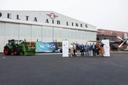
Delta Air Lines on Sept. 30 joined partners across Georgia to launch the Georgia Sustainable Aviation Fuel (SAF) Coalition, which aims to advance SAF production and drive economic investment across Georgia.
LoCI Controls Inc. on Sept.29 announced the launch of LoCI Controls Canada, extending the company's position as a market and technology leader in helping landfill operators maximize the financial performance of renewable natural gas (RNG) projects.

Book-and-claim already works for RNG as transportation fuel, so why not process energy at ethanol plants?

The Sustainable Aviation Buyers Alliance on Sept. 22 announced commitments from members to purchase sustainable aviation fuel certificates (SAFc) associated with Infinium Energy's Project Atlas, an eSAF facility.
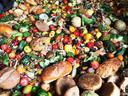
Scaling food waste-based RNG requires more than proven digestion technology—it takes reliable feedstock, preprocessing infrastructure, long-term contracts and durable markets.
The USDA on Sept. 29 announced increased financial assistance for the Regenerative Pilot Program from $700 million to $1 billion in fiscal year 2027, providing more producers with the opportunity to adopt conservation systems.
France-based Waga Energy on Sept. 29 announced the company produced 426 gigawatt hours (GWh), or 1.5 million MMBtu, of renewable natural gas (RNG) during the first half of 2026, up 31% when compared to the same period of 2025.
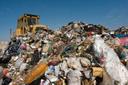
The Colorado Department of Public Health and Environment’s Air Pollution Control Division on Sept. 2 announced the launch of its Landfill Methane Mitigation Program, which aims to help landfill operators expedite methane emission reduction initiatives.
Anaergia Inc., through its subsidiary Anaergia Srl, and TisVet Kft have entered into an agreement, under which Anaergia Srl is to supply technology and engineering services for a new anaerobic digestion facility in Hungary.

Haffner Energy launches SB-HEFA, an innovative process for producing renewable diesel and SAF based on its proprietary thermolysis technology, which directly converts solid biomass into liquid without going through syngas.
Call for speaker abstracts now open for the 2027 International Biomass Conference & Expo

By BBI International
September 29, 2026
The call for presentation abstracts for the 20th Annual International Biomass Conference & Expo, produced by Biomass Magazine, is now open. The event will take place March 2-4 at the Cobb Convention Center in Atlanta, Georgia.
Aemetis Inc. on Sept. 28 announced that it has received $22.4 million from the sale of Section 45Z clean fuel production tax credits that were generated from ethanol and renewable natural gas (RNG) production in 2026.
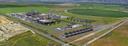
SkyNRG on Sept. 28 announced the selection of Technip Energies, Sasol and Topsoe as key partners for the initial engineering activities of the FEED phase of Project Wigeon, its planned SAF facility at the Port of Walla Walla in Washington State.

Advertisement

@ Copyright 2026 - BBI International - All rights reserved.