

CARB on Aug. 12 issued proposed changes to California’s Low Carbon Fuel Standard program that impact the biogas industry and its role in delivering fuel and reducing greenhouse gas emissions within the state.

The Surface Transportation Board is seeking nominees to fill five vacancies on its Rail Energy Transportation Advisory Committee. One vacancy is to be filled by a biofuel producer or feedstock grower.

The U.S. Department of Energy is inviting applications for up to $2 million in support for projects that aim to accelerate wood heater innovation, reduce wood heater pollutants and develop the next generation of efficient and clean wood heaters.
The RNG Coalition is welcoming proposed modifications to California's LCFS offered by the California Air Resources Board that should enable increased methane capture and greater diversity of clean fuels in the state.

The 2024 North American SAF Conference & Expo will consist of panels that describe the newest developments in the SAF Industry. Topics such as biofuel crops, federal policies, the increase of SAF usage worldwide, and more will be presented.

Reps. Mike Flood, R-Neb., and Troy A Carter, Sr., D-La., on Aug. 9 introduced the Sustainable Aviation Fuel (SAF) Information Act. The bill directs the U.S. Energy Information Administration to include SAF data in its weekly and monthly reports.

Gevo Inc. on Aug. 9 released a new report by Charles River Associates demonstrating the benefits of sustainable aviation fuel (SAF) production, including at Gevo’s planned Net-Zero 1 (NZ1) alcohol-to-jet (ATJ) SAF facility in South Dakota.

The National Renewable Energy Laboratory, in partnership with the U.S. Department of Energy Bioenergy Technologies Office, released the first two parts of the Sustainable Aviation Fuel (SAF) State-of-Industry Report.

Sens. Sherrod Brown, D-Ohio, and Roger Marshall, R-Kan., and 13 of their colleagues are urging Treasury Secretary Janet Yellen to restrict the 45Z Clean Fuel Production Credit to fuels made from domestic feedstocks.

The biogas reform clock is ticking as Oct. 1 is the deadline to re-register existing facilities to ensure continuous renewable identification number (RIN) credits generation under the Renewable Fuel Standard in 2025.

Thailand’s newly proposed National Energy Plan is expected to set a target for sustainable aviation fuel (SAF) starting in 2026, according to a report filed with the USDA. The plan also includes targets for ethanol and biodiesel.

The U.S. Court of Appeals for the D.C. Circuit on July 26 issued an order vacating most of the U.S. EPA’s 2022 denials of petitions for SREs from RFS obligations, and remanding those petitions to EPA for further proceedings.
The Sustainable Aviation Fuel (SAF) Coalition responds to USDA request for information on biofuel feedstocks, encouraging the agency to ensure federal policies are science-based and technology and feedstock neutral.
Clean Fuels Alliance America on July 25 submitted a highly detailed, technical response to USDA’s request for information on climate smart agriculture practices for biofuel feedstocks, and emphasized the need for immediate 45Z guidance.

Rep. Mike Carey, R-Ohio, on July 18 introduced legislation that aims to extend the existing $1 per gallon blenders tax credit for biodiesel and renewable diesel for one year, through the end of 2025.

A bipartisan group of 16 senators and 36 representatives on July 23 sent a letter to U.S. Treasury Secretary Janet Yellen urging her agency to take immediate action to finalize the rules to implement the 45Z clean fuel production credit.

American Farm Bureau Federation, National Corn Growers Association, Biotechnology Innovation Organization, American Soybean Association, and American Biogas Council are among more than 500 organizations calling for the passage of a new Farm Bill.

The U.K. Department for Transport on July 22 sent a written statement to the U.K. Parliament confirming that, subject to Parliamentary approval, the agency will introduce a sustainable aviation fuel (SAF) mandate starting on Jan. 1, 2025.

The U.S. EPA on July 18 announced it has reached a settlement with Lupton Petroleum Products Inc., and its affiliate Brad Hall Associates Inc., for violations of the Clean Air Act’s conventional and renewable fuel requirements.

The U.S. Department of Transportation’s Federal Aviation Administration has launched $1 billion fiscal year (FY) 2025 funding opportunity that could help U.S. airports develop infrastructure to increase access to sustainable aviation fuel (SAF).

Growth Energy and others filed two intervenor briefs in the U.S. Court of Appeals for the District of Columbia Circuit related to a set of consolidated lawsuits filed by oil industry and environmental petitioners challenging EPA’s RFS “set” rule.

The DOE has announced its intent to fund partnerships between industry stakeholders and Feedstock-Conversion Interface Consortium researchers. The partnerships will address the cost and risk impacts of feedstock and process variability.
Nearly 2.04 billion RINs were generated under the RFS in June, down from 2.06 billion generated during the same month of last year. Total RIN generation for the first half of 2024 reached 12.07 billion.
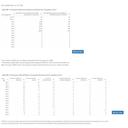
The U.S. EPA on July 18 released updated small refinery exemption (SRE) data, reporting that seven new SRE petitions have been filed under the RFS during the past month. A total of 46 SRE petitions are now pending.
U.S. farm groups are urging the Biden administration to maximize the benefits of the 45Z clean fuels production tax credit by ensuring only fuels made using domestically produced feedstocks are eligible and improving climate-smart ag provisions.

Maine Gov. Janet Mills on July 2 announced the award of a $100,000 grant to the Maine Pellet Fuels Association. The funding will support efforts to expand domestic markets for wood pellet fuel manufactured within the state.
King Charles announced that the U.K. Parliament will soon introduce a bill to support the production of SAF via a revenue support mechanism during his July 17 speech that formally opened a new session of the British Parliament.
On July 17, Clean Fuels Alliance America delivered a formal notice of intent to sue the U.S. EPA for its failure to issue timely 2026 Renewable Fuel Standards. EPA is required to finalize volumes 14 months before the start of the compliance year.

The European Commission on July 2 approved, under EU State Aid rules, Sweden’s plans to provide up to EUR 3 billion in subsidies to support carbon capture and storage (CCS) projects focused on biogenic CO2.
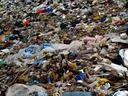
The Canadian government on June 28 released proposed regulations to require landfills to control methane emissions and ensure landfill gas-recovery systems capture as much methane as possible. A public comment period is open through Aug. 28.
Advertisement

@ Copyright 2026 - BBI International - All rights reserved.